

Cotton Voile vs Linen for Humid Travel
TLDR
- Cotton voile is a fine, plain-weave cotton: thin, airy, soft hand, often slightly sheer in pale colors.
- Linen is flax: strong fiber, open weave possible, cool to the touch, and it dries fast in humidity.
- In sticky air, linen usually moves moisture off the skin faster; voile feels lighter and smoother against the body.
- Weave density matters as much as fiber. A tight cotton broadcloth can feel hotter than a looser linen of similar weight.
- Both take garment dye well. At Ploumanac'h, Rainbow finishes sit in the cloth so color has depth without a stiff surface coat.

What is cotton voile?
Cotton voile is a lightweight cotton cloth built on a fine plain weave. The yarn is often high-twist, which adds strength so the cloth can stay open and still hold structure. The result is thin, breathable fabric with a soft, slightly cool hand and a fluid drape.
Zelouf Fabrics describes cotton voile as lightweight and semi-sheer, with a smooth texture and good airflow through the open plain weave. That sheerness is part of the design: light passes through the cloth, so pale shades can read translucent in strong sun. Deeper colors hide more of the body line.
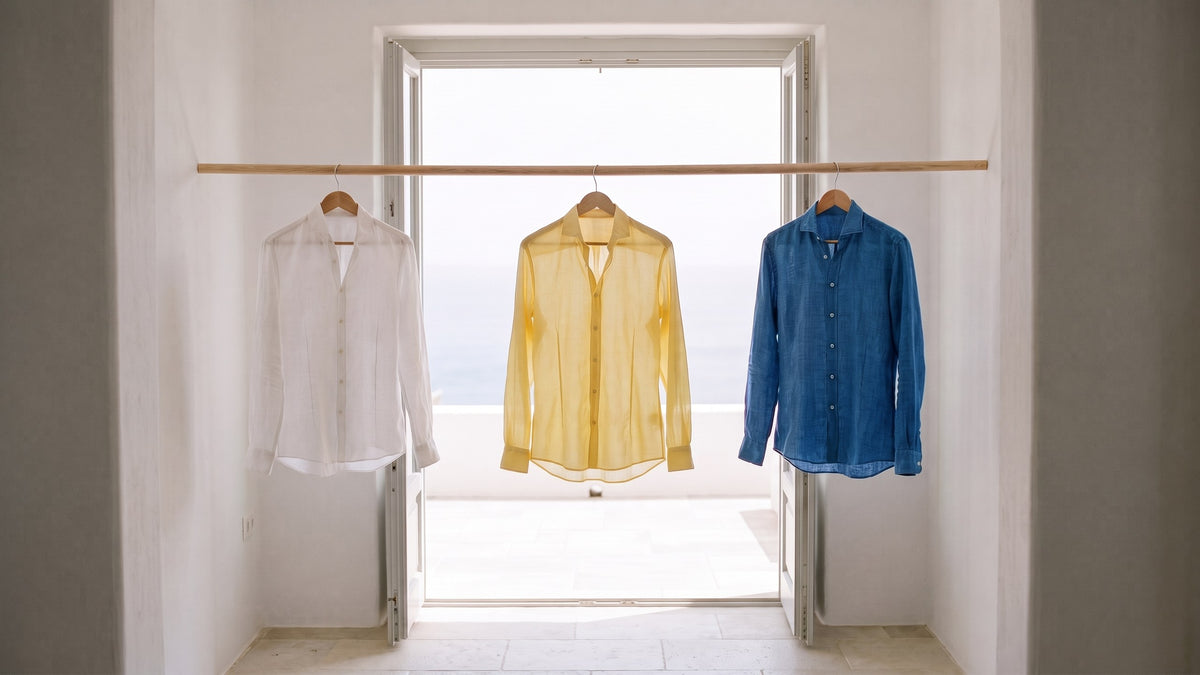
On Ploumanac'h shirts such as the Steve Voile Shirt in Canary, the cloth is 100% cotton voile: thin, compact enough for a shirt, and still open enough for heat. The house notes a firm yet airy quality rather than a floppy gauze.
What is linen for travel shirts?
Linen is spun from flax. The fiber is strong, so mills can weave it more loosely than many cottons without the cloth falling apart. That open structure is why linen feels cool in heat: air moves through the gaps, and the fiber conducts heat away from the skin.
Permanent Style's summer shirt guide puts breathability ahead of sheer lightness. Superfine, dense cottons can weigh little and still trap heat. Linen's strength lets the weave stay open. The same guide notes linen feels cool to the touch because the fiber conducts heat well, similar to how metal feels cool on contact.
The American Sewing Guild calls linen a summer standard for the same reasons: breathability, moisture movement, and a quick dry in humid air. Wrinkles are part of the cloth's behavior, not a manufacturing fault.
Ploumanac'h linen shirts such as the Slim Fit Linen Shirt in Oceano and the women's Valeria Linen Shirt in White are 100% linen, garment dyed, cut for coastal days rather than boardroom starch.

Cotton voile vs linen in humidity
| Factor | Cotton voile | Linen |
|---|---|---|
| Fiber | Cotton | Flax |
| Typical hand | Soft, smooth, thin | Dry-cool, textured, slub possible |
| Weave feel | Fine plain weave; can read sheer | Often more open; holds structure when loose |
| Moisture in sticky air | Absorbs; dries slower than linen when heavy with sweat | Moves moisture and dries faster in humid air |
| Wrinkle | Creases, usually softer folds | Sharp, lived-in creases |
| Opacity | Pale colors can show underlayers | Usually more opaque at similar shirt weights |
| Best day | High heat, light activity, under a knit later | All-day sun, boats, walking, humid evenings |
Humidity changes the test. In dry heat, almost any open natural cloth feels fine. In wet air, the question is how fast the cloth releases water vapor and how much it clings.
Linen tends to win the moisture race. ASG notes linen's strength includes quick drying in humid climates. Cotton holds water longer in the fiber; a soaked cotton shirt stays cool for a moment, then feels heavy against the skin. Fabriculture's cotton vs linen summer note pairs linen with superior breathability and faster evaporation, and points to light cotton weaves such as voile for dry heat when you want air without flax's full wrinkle.
Voile still has a clear job. The cloth is thinner and softer than many linens. On a boat or a long lunch in shade, that soft hand can feel calmer than a crisp flax face. High-twist voile yarns (as Permanent Style describes for voile shirting) keep the weave open without turning the shirt into cheesecloth. The trade-off is sheerness and less structure at the collar if the cut is very light.
Neither fiber fixes a bad weave. A dense cotton broadcloth is a poor humid-travel shirt no matter how fine the yarn. An open linen or a true voile both beat it.
Drape, weight, and how the shirt sits
Voile drape. The cloth falls close to the body with soft movement. Spread collars stay light. Long sleeves feel almost shirt-dress thin. Fit choices matter: slim cuts show the body more because the fabric is thin; relaxed fits add air between cloth and skin, which helps in heat.
Linen drape. Linen holds a cleaner plane when pressed, then softens into soft breaks at elbows and seat. It reads more structured on the hanger and more casual after a day of wear. Slim linen still keeps more opacity than pale voile.
Weight is not the whole story. Hartford lists some cotton voile shirtings around 75 g/m², a light summer band. Linen shirtings vary widely. Judge by hand and hold-to-light tests: if you see your hand clearly through the cloth in daylight, plan an undershirt or a deeper color for public wear.
Color and garment dye on both cloths
Both cotton and linen take dye baths well. Garment dyeing colors the finished shirt, so seams, darts, and texture hold tone differently than a flat piece-dyed roll. At Ploumanac'h, Rainbow works as layered pigment baths on the finished piece: slow absorption, a washed surface, and small variation from shirt to shirt. That finish sits on voile and linen without turning either into a coated synthetic hand.
See the process background in What Is Garment Dyeing?. For linen-specific wear notes, read Italian Linen Shirt: Weight, Weave, and When to Wear It.
Which to pack for humid travel
Pack cotton voile when:
- Days run hot and you want the lightest long-sleeve layer.
- You prefer a smooth cotton hand over flax texture.
- You will wear deeper colors (Canary, Oceano-level depth, mid blues) so sheerness stays quiet.
- Evenings need a soft shirt under a thin knit.
Pack linen when:
- Humidity stays high from morning to night.
- You walk, sail, or sit in direct sun for hours.
- You want faster dry-down after sweat or sea spray.
- You accept creases as part of the look.
A simple coastal week mix: one or two voile shirts for peak heat, one or two linen shirts for all-day wear, a light knit for evening breeze. Destination notes for island heat live in What to Pack for Capri and What to Wear in Sardinia.
Browse current cuts in men's shirts (voile and linen sit side by side) and linen pieces such as Oceano slim linen or Valeria white linen. For voile, start with Steve in Canary or a relax-fit voile.
Care notes (both cloths)
- Wash cold or warm per the label; turn inside out on deep Rainbow colors for the first washes.
- Mild detergent. Skip heavy softener on fine voile; it can dull the hand.
- Air dry. High dryer heat ages color and can shrink natural fibers.
- Steam or iron linen while slightly damp if you want a cleaner morning face; many travelers skip the iron and let the crease tell the day.
- Store hung or folded flat so collars keep their roll.
FAQ
Is cotton voile cooler than linen?
Not always. Voile is thinner and can feel lighter on the skin. Linen usually breathes and dries better in true humidity. Fiber, yarn twist, and weave openness decide the real result more than the name on the hangtag.
Will voile show through?
Pale voile can. Deeper colors and a well-cut undershirt solve most cases. Hold the shirt to a window before you pack it for a formal dinner.
Does linen always wrinkle more than voile?
Linen creases more sharply. Voile wrinkles too, but the folds tend to look softer. Both recover somewhat on the body with wear and humidity.
Can I wear either on a plane?
Yes. Linen handles long sits and cabin dryness with less cling once you land in humid air. Voile packs smaller and feels soft under a jacket. Carry both if the trip mixes flights and coastal days.
Are blends a middle path?
Cotton-linen blends aim for cotton's cleaner face and linen's air. Permanent Style often prefers cotton/linen for versatile summer shirts. Pure linen and pure voile still give clearer behavior when you want one job done well.
Closing
Cotton voile and linen both belong in humid travel, for different hours of the day. Voile is the thin, soft cotton layer for peak heat and quiet drape. Linen is the flax layer that moves moisture and stays cool when the air will not dry anything fast. Choose by handfeel and weave openness, then match color depth to how sheer you want the cloth to read.
Current Ploumanac'h options live in men's shirts, with live examples such as the Steve voile in Canary and the Oceano slim linen.

Commenta
Questo sito è protetto da hCaptcha e applica le Norme sulla privacy e i Termini di servizio di hCaptcha.