

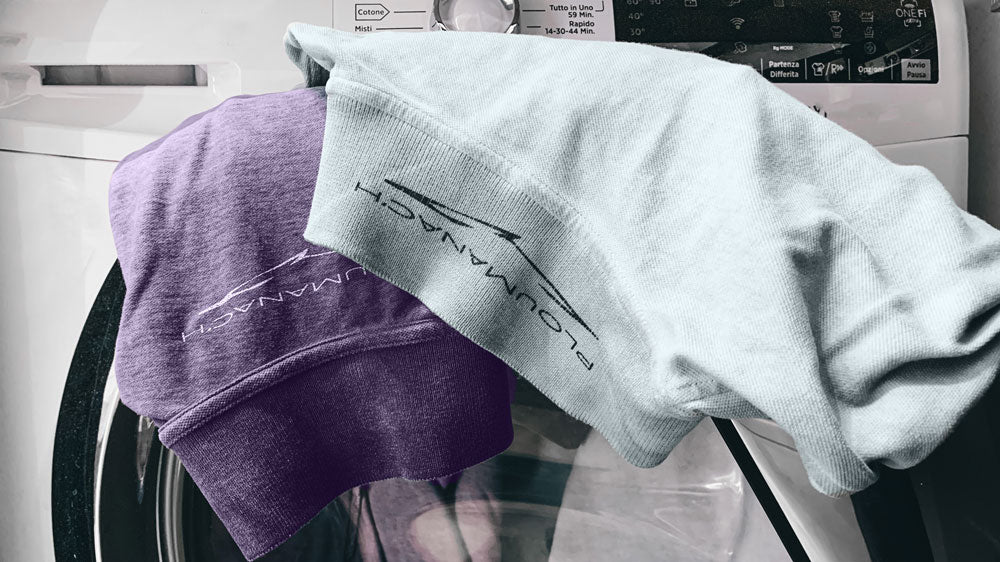
How to Wash Polo Shirts (and Whether You Can Tumble Dry)
Whether you wear short-sleeve or long-sleeve knitwear, polo shirts sit between casual comfort and considered style. You can explore our collection of cotton and linen polos to see how garment-dyed natural fibers behave when finished after sewing. Maintaining their shape, handfeel, and collar structure over seasons comes down to gentle laundry habits. Aggressive cycles, excess heat, and harsh detergents break down cotton fibers and curl collars.
Here is how to wash your polo shirts properly so they keep their color, drape, and collar structure intact.
First, Check the Care Label
The sewn label confirms the fiber composition and laundry thresholds. Ploumanac'h polo shirts use natural fibers such as cotton piqué, stretch cotton, and linen blends, finished with garment dyeing.
Always turn your polos inside out before they go into the machine. This protects the outer surface from friction against other garments, stops pilling, and preserves the garment-dyed color tone.
Machine Washing and Water Temperature
Handwashing can be tedious and wringing wet garments twists natural fibers out of alignment. A gentle machine cycle works reliably.
- Cycle: Use a delicate or handwash setting with low spin (600 to 800 RPM).
- Water temperature: Use cold water (maximum 30°C / 85°F). Cold water protects cotton fibers from shrinkage and keeps garment-dyed pigments stable.
- Colors: Wash similar shades together. Keep light colors away from dark blues and saturated tones.
- Detergent: Choose a mild liquid detergent. Avoid chlorine bleach, aggressive stain removers, and fabric softeners. Softeners coat natural cotton fibers in a chemical residue that impairs breathability.
If you are wondering whether to fasten the placket before loading, read our guide on should you button shirts before washing to protect your collar and buttons.
Keep Polo Collars Flat and Structured
Collar curl is the most common issue with knit shirts. Preventing it takes seconds during the wash routine:
- Button the top button or entire placket before washing.
- Turn the collar upright before the shirt goes into the drum.
- Remove the shirt immediately when the spin cycle ends.
- Smooth the collar flat between your fingers while the knit is damp.
For a deeper look into collar care techniques, see our guide on how to wash a polo shirt without ruining the collar.
Drying: Air Dry Flat, Skip the Dryer
Heat in a tumble dryer shrinks cotton and breaks the elasticity in stretch piqué knits.
Lay your polo shirt flat on a drying rack over a clean towel. Avoid thin wire hangers while wet, as water weight can pull the shoulders out of shape. If you prefer to hang dry, use a wide contoured hanger once excess moisture has drained.
How to Prevent Yellow Underarm Stains
Yellow marks under the arms rarely come from perspiration alone. They occur when sweat reacts with aluminum salts found in conventional antiperspirants. Over repeated wears and hot wash cycles, this chemical compound bakes into cotton fibers.
Switching to an aluminum-free deodorant stops this buildup completely and keeps light-colored shirts clean. If you already have discolored whites, review our practical tips on how to keep white clothes white.
Folding and Storage
Once dry, fold your polo neatly or store on a rounded hanger. If packing for a trip, our tutorial on how to fold a polo shirt for travel shows how to pack without creasing the placket.
Cotton pique polos to wear
Explore the full range of men's polo shirts, crafted in Italy and dyed in coastal tones.
- Hampton Polo Slim in Pietra: Stretch cotton piqué in a soft stone shade with an unlined collar.
- Club Polo Slim in Santorini: Pure cotton piqué garment dyed in vivid Mediterranean blue with ribbed cuffs.
- Club Polo Slim in Mistral: Lightweight breathable piqué knit in soft coastal sky blue.
Join the Ploumanac'h Club
Receive notes on Italian fabric sourcing, garment-dye experiments, and early access to seasonal collections.
